
Environmental Research
Wetland Heavy-Metal Risk Assessment
A multi-media assessment of heavy-metal contamination and associated risks in two inland wetlands in Northern Ghana.
Environmental Data & Public Health
Project overview
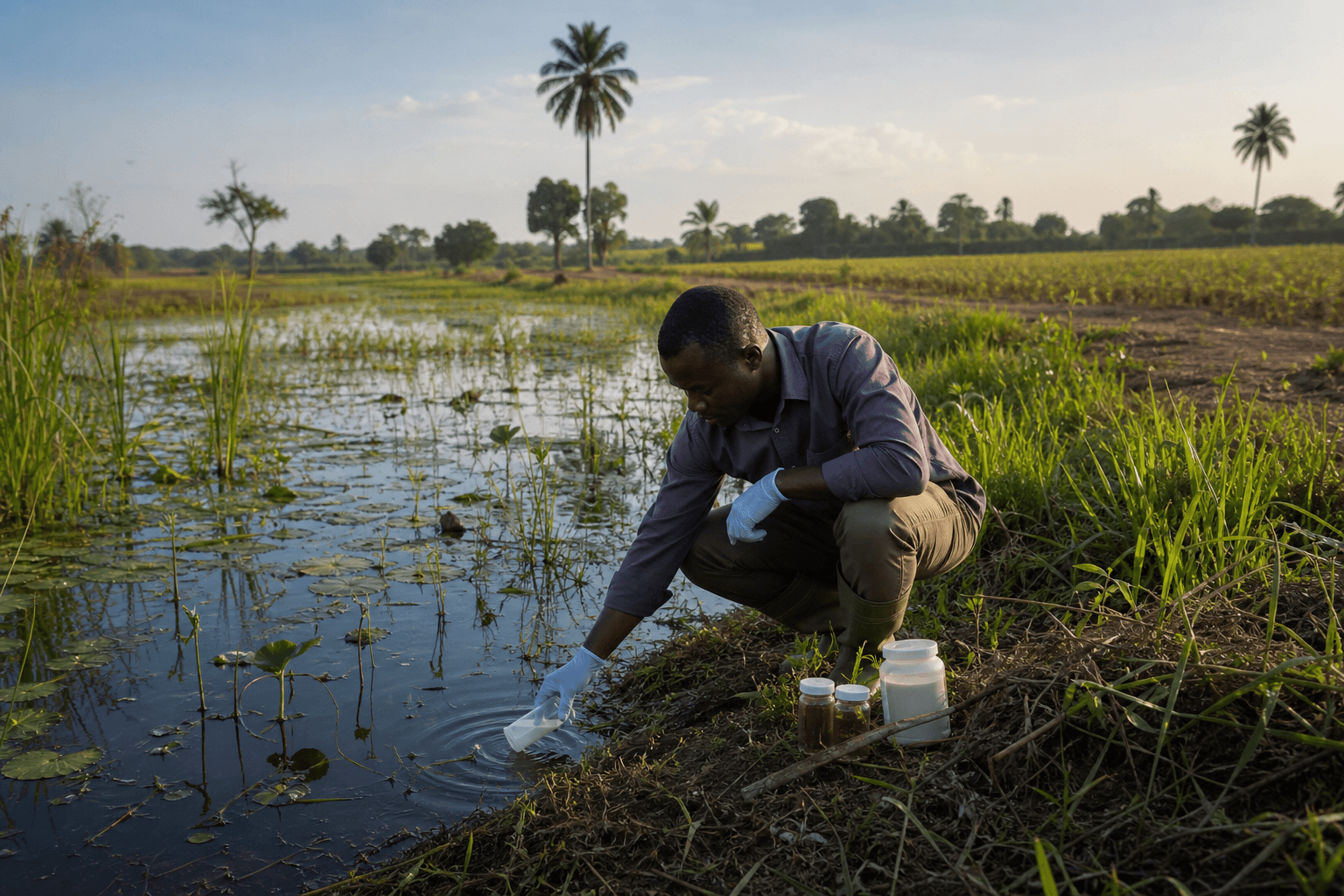
This research examines agricultural practices and heavy-metal residues across soil, water, vegetables, and fish from the Libga and Bunglung wetland areas, connecting laboratory measurements with ecological and human-health risk assessment.
The problem
Agricultural activity around inland wetlands can introduce contaminants into water, soil, crops, and aquatic food systems, but the immediate and long-term risks differ across these exposure pathways.
Approach
- 1
Organize laboratory concentration data covering multiple metals and sample media.
- 2
Compare concentration patterns across soil and water and examine spatial variability.
- 3
Benchmark observed concentrations against cited WHO/FAO limits.
- 4
Calculate hazard quotients and ecological risk factors for priority metals.
- 5
Assess uptake and bioaccumulation patterns in vegetables and fish samples.
Outcomes and insights
The report identifies water as the most urgent exposure pathway relative to soil.
It reports particularly high ecological and human-health concern associated with arsenic and cadmium in water.
The analysis recommends improved agrochemical management, wetland buffer zones, water protection, and continued monitoring.